entry.S解析和调试

代码分析

entry.S是xv6上电后执行的第一段代码,用于设置每个CPU的栈指针并跳转到start函数,每个CPU拥有4KB的栈空间。

1
2
3
4
5
6
7
8
9
10
11
12
.section .text
_entry:
la sp, stack0
li a0, 1024*4
csrr a1, mhartid
addi a1, a1, 1
mul a0, a0, a1
add sp, sp, a0
# jump to start() in start.c
call start
spin:
j spin

整段代码的作用是令sp = stack0的地址 + 4096 × (当前运行的CPU核心编号 + 1)。
la sp,stack0,la是load address,将stack0的地址赋值到sp寄存器,在RISC-V架构中sp是栈指针寄存器。
li a0,1024*4,li是load immediate,加载立即数4096到a0。
csrr a1,mhartid,是读取mhartid的值到a1中,mhartid是CPU核的编号,比如一共有4个CPU在运行entry.S,那么它们加载到的mhartid就分别是0,1,2,3。
addi a1,a1,1,是让a1等于a1加上立即数1,即a1=a1+1。
mul a0,a0,a1,是让a0 = a0 * a1,我们知道a0刚刚被赋值为4096,而a1等于mhartid+1,所以a0 = 4096 × (mhartid + 1)。
add sp , sp , a0,是让sp = sp + a0,即sp = stack0的地址 + 4096 × (mhartid + 1)。

gdb调试

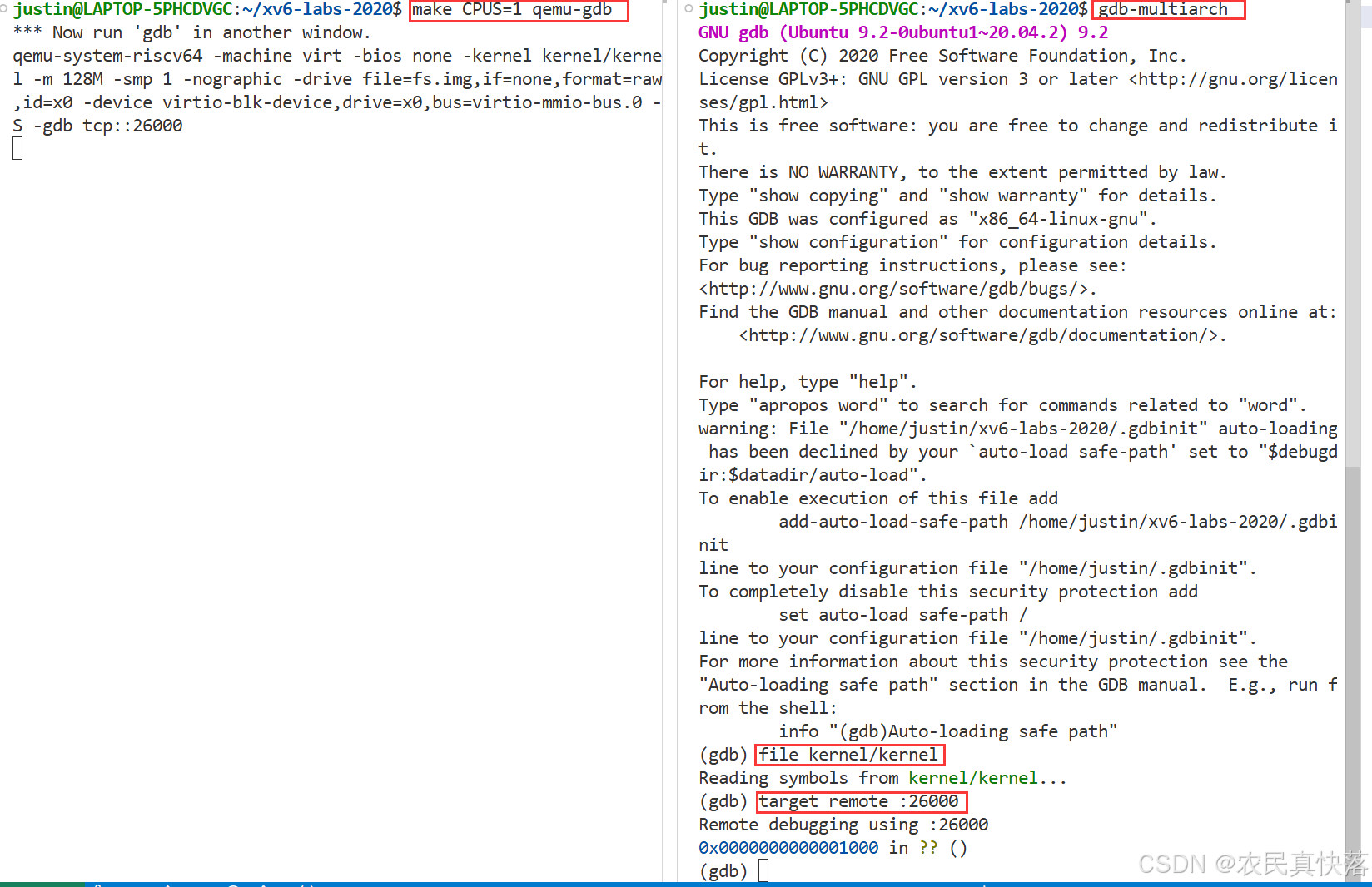
  1. 首先启动项目以及gdb调试
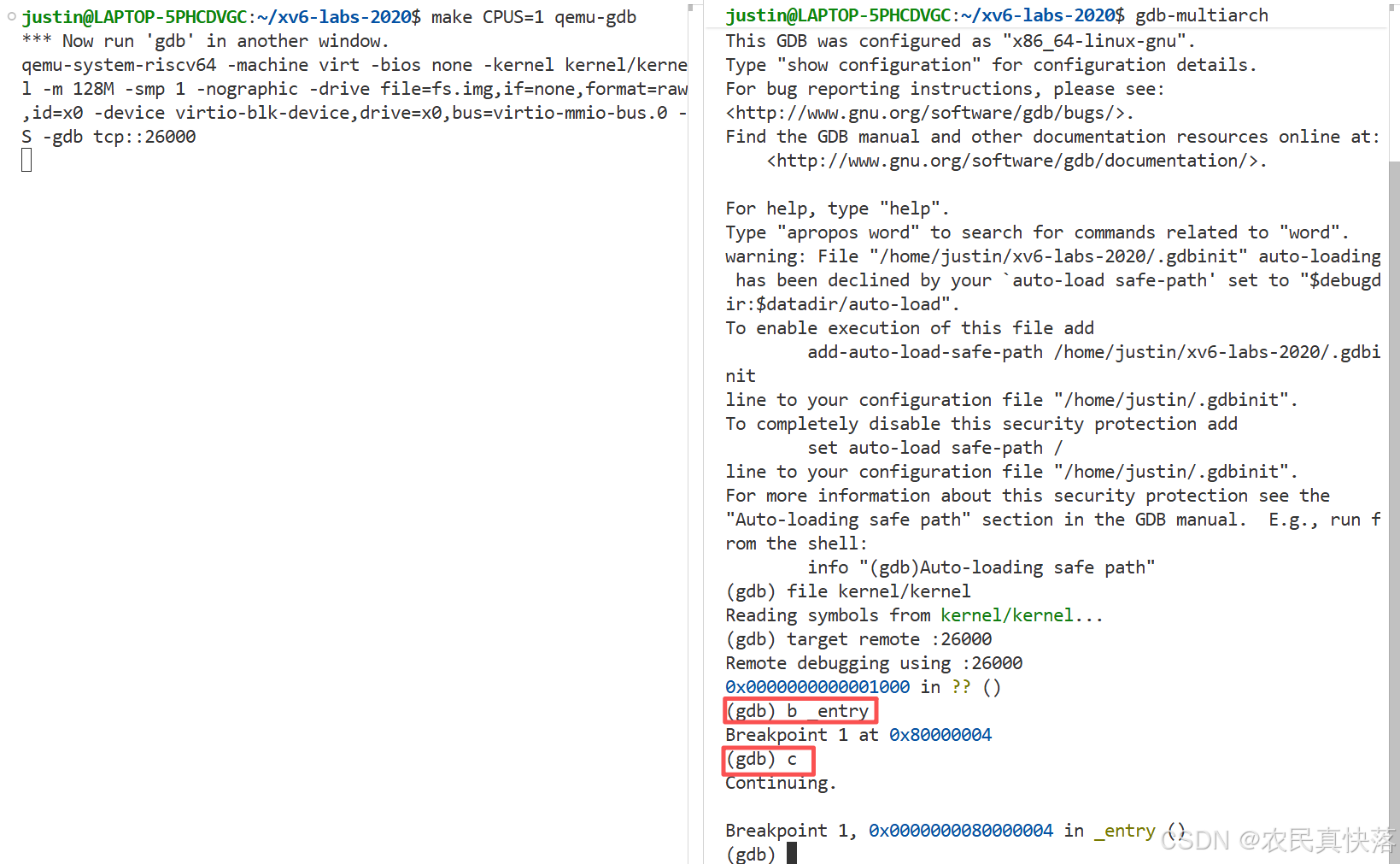
  1. 运行到_entry断点处

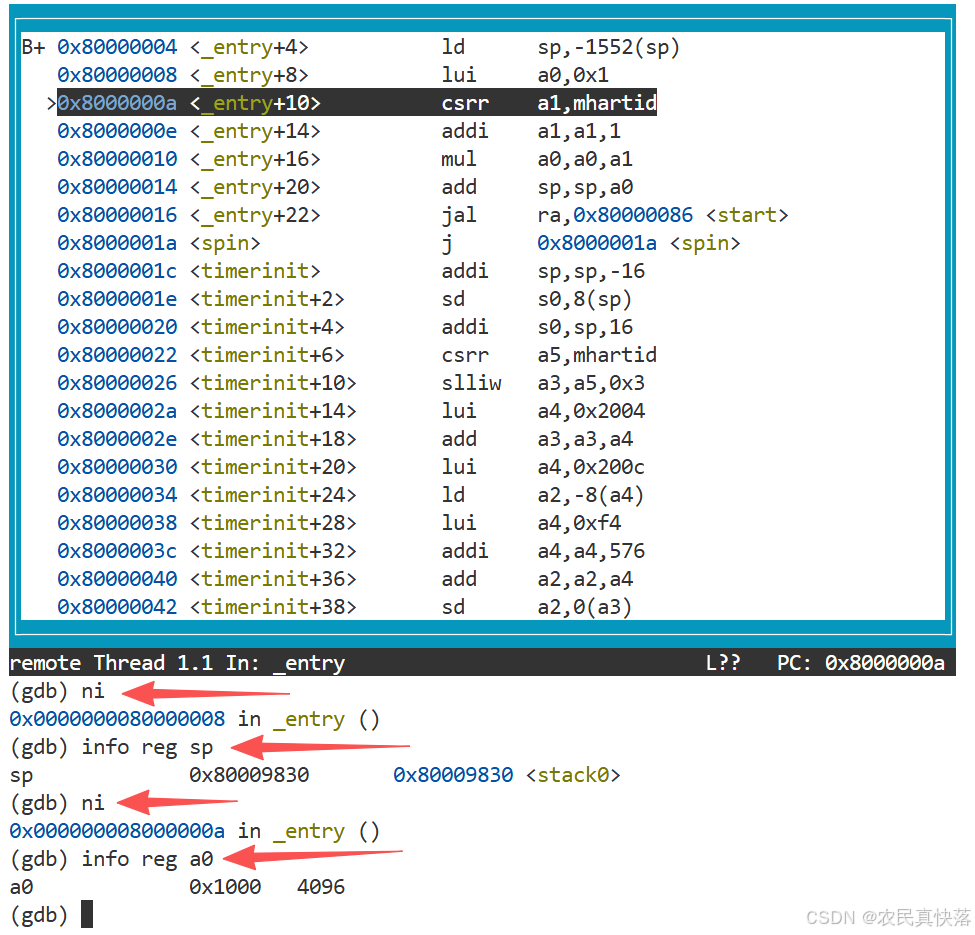
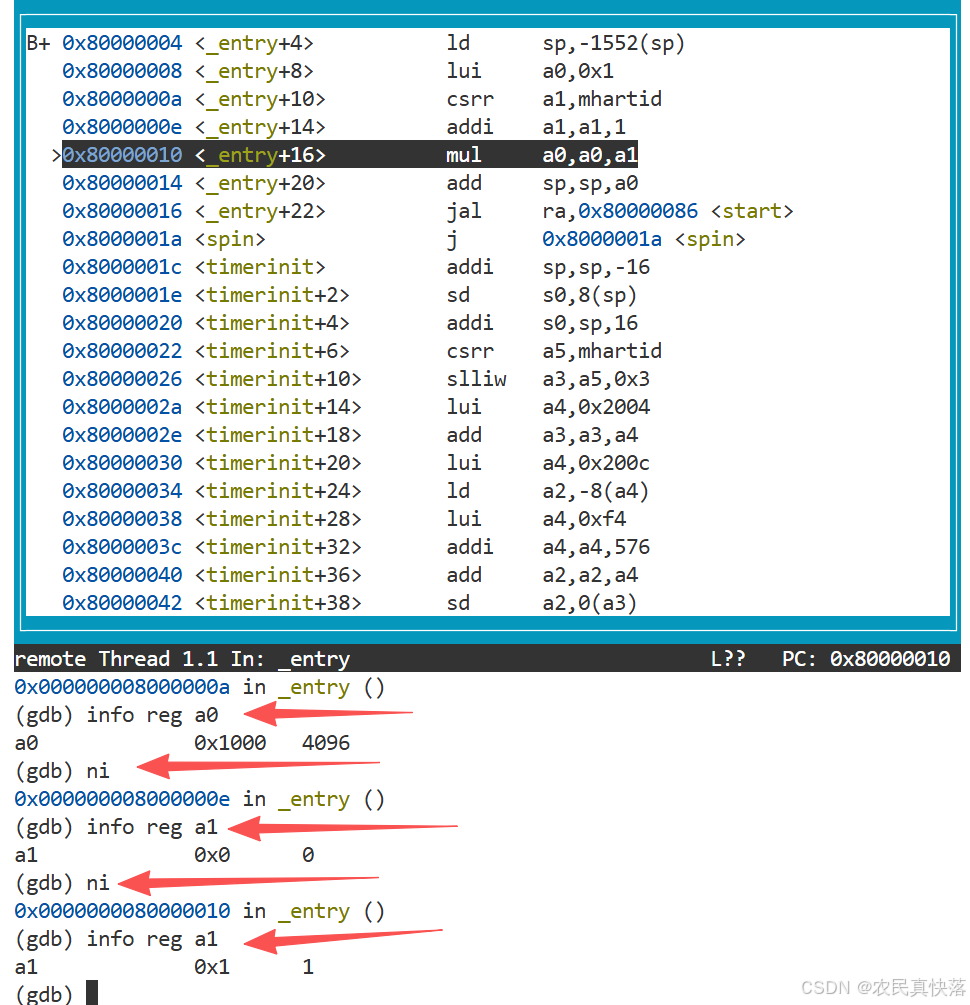
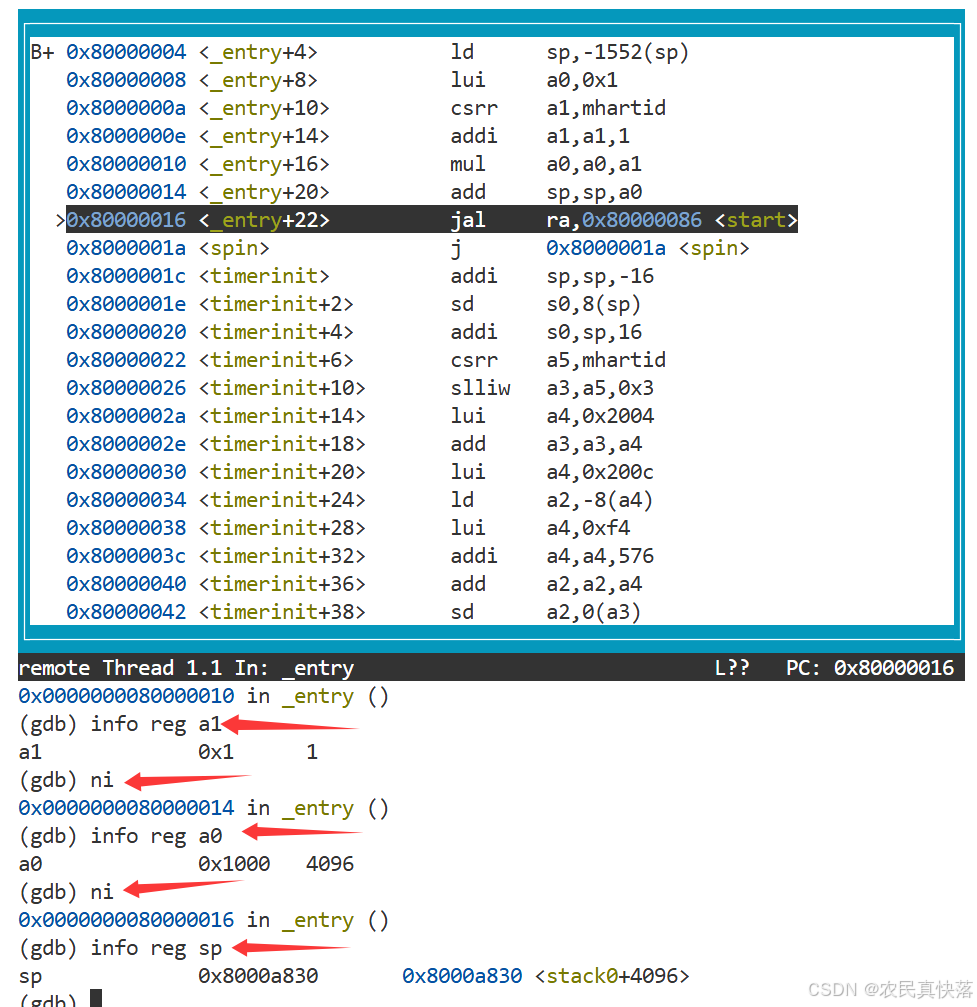
3.依次查看各条指令执行情况
首先输入layout asm,然后依次执行各条指令,并查看执行结果的寄存器值,验证之前的代码分析。可以看出其实真实执行的汇编和编写的entry.S是有所不同的,因为编写的entry.S中有伪指令,例如la sp,stack0在实际执行时是ld sp,-1552(sp),call start在实际执行的时候是用jal无条件跳转到start的地址,并将start地址后的0x80000086+4赋值给返回地址寄存器ra中。


start.c解析和调试

start.c解析

首先需要认识到RISC-V架构中,CPU核具有三种模式,机器模式、监督者模式、用户模式,机器模式是任何RISC-V CPU核都需要支持的最高级模式,具有CPU的一切权限,哪怕是嵌入式领域的小mcu也需要支持机器模式。监督者模式也被称为内核模式、内核态,运行操作系统内核程序。
start函数运行在机器模式,它主要做的事情就是将CPU从机器模式切换到监督者模式。
首先读取mstatus寄存器到x中。

1
2
3
4
unsigned long x = r_mstatus(); // 读取mstatus寄存器到x
x &= ~MSTATUS_MPP_MASK; //riscv.h 定义了 #define MSTATUS_MPP_MASK (3L << 11)
x |= MSTATUS_MPP_S; //riscv.h 定义了 #define MSTATUS_MPP_S (1L << 11)
w_mstatus(x); // 将x写入mstatus寄存器

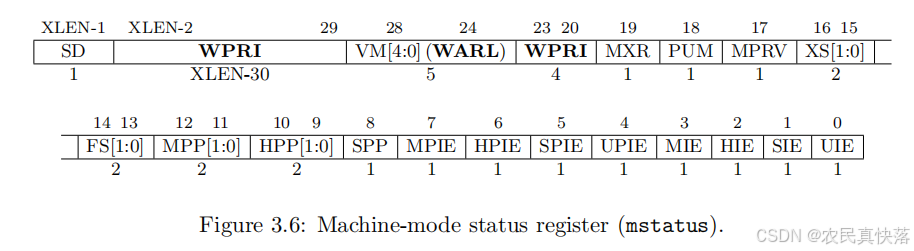
根据riscv-privilege-v1.9文档,mstatus寄存器格式如下。由图可知,MPP位于mstatus[12:11],表示machine previous privilege,如果MPP设置为S模式,那么mret命令执行后CPU就会回到S模式。MPP的取值从高(11)到低分别表示如下模式:

  • M-mode(Machine Mode,机器模式):最高特权级,无权限限制,负责硬件初始化、特权级配置等底层操作(如 xv6 的start函数初始运行模式)。
  • H-mode(Hypervisor Mode,虚拟化模式):可选特权级,用于虚拟化场景,负责管理多个客户机操作系统,普通 xv6 系统不启用该模式。
  • S-mode(Supervisor Mode,监督者模式):内核运行模式,负责进程调度、内存管理、外设驱动等核心功能(xv6 内核的主要运行模式)。
  • U-mode(User Mode,用户模式):最低特权级,用于运行用户应用程序,访问资源受内核严格限制(如普通的 shell 命令、自定义程序都运行在该模式)。
    由于start函数运行在M模式,希望返回到S模式,后面操作系统内核就可以运行在S模式了,所以应该令MPP为10。
    MSTATUS_MPP_MASK为3L<<11,即1100000000000,取反后为0011111111111,x&=~MSTATUS_MPP_MASK意思是让x其余位不变,MPP位变为00。MSTATUS_MPP_S是1L<<11,即100000000000,x|=MSTATUS_MPP_S意思是让MPP低位为1,即MPP变为01。

因此,这几句话的作用是将mstatus寄存器的MPP位设置为01,从而在执行mret时CPU能够返回到S模式。

这行代码的作用是设置mepc寄存器指向main函数的地址,即在执行mret后CPU会开始执行main函数。

1
w_mepc((uint64)main); // riscv.h中定义了内联函数w_mepc执行asm volatile("csrw mepc, %0" : : "r" (x));

这行代码的作用是禁用分页机制,让虚拟地址和物理地址直接等同,简化初始化流程。

1
w_satp(0);

这两行是将机器模式的中断和异常全部交由S模式来处理。medeleg和mideleg是两个寄存器,比特位置 1 表示 “该类型中断委托给 S-mode 处理”,置 0 表示 “该类型中断保留在 M-mode 处理”,这里全部置为1,将机器模式中断和异常全交给S模式处理。

1
2
w_medeleg(0xffff);
w_mideleg(0xffff);

这行的作用是读取sie寄存器,并开启外部中断、定时器中断和软件中断。

1
w_sie(r_sie() | SIE_SEIE | SIE_STIE | SIE_SSIE);

riscv.h定义了SIE_SEIE,SIE_STIE,SIE_SSIE宏以及r_sie()函数,r_sie()函数读取sie寄存器,SEIE、STIE、SSIE分别代表外部中断、定时器中断和软件中断使能。

1
2
3
4
5
6
7
8
9
10
#define SIE_SEIE (1L << 9) // external
#define SIE_STIE (1L << 5) // timer
#define SIE_SSIE (1L << 1) // software
static inline uint64
r_sie()
{
uint64 x;
asm volatile("csrr %0, sie" : "=r" (x) );
return x;
}

下面几行代码初始化定时器,然后读取mhartid赋值给tp寄存器,tp是thread pointer寄存器,最后执行mret返回到s模式,并执行main函数。

1
2
3
4
5
6
7
8
9
// ask for clock interrupts.
timerinit();

// keep each CPU's hartid in its tp register, for cpuid().
int id = r_mhartid(); //riscv.h中定义了asm volatile("csrr %0, mhartid" : "=r" (x) );
w_tp(id); // riscv.h中定义了w_tp为asm volatile("mv tp, %0" : : "r" (x));

// switch to supervisor mode and jump to main().
asm volatile("mret");

对于timerinit()函数,先不用管具体实现,需要知道的是当timerinit()初始化执行完成后,定时器中断的处理流程为:

  1. 当MTIME ≥ MTIMECMP时,硬件触发 M-mode 定时器中断;
  2. CPU 根据mtvec寄存器的配置,跳转到timervec汇编函数执行;
  3. timervec先将通用寄存器保存到mscratch0的预留空间(scratch[0..3]);
  4. timervec从scratch[4]和scratch[5]读取MTIMECMP地址和间隔,更新MTIMECMP的值(当前MTIME + interval),实现周期性中断(否则仅触发一次中断);
  5. timervec将 M-mode 定时器中断转换为 S-mode 软件中断(通过设置sip寄存器的软件中断位);
  6. 中断委托机制生效,S-mode 内核接收到软件中断,由trap.c中的devintr()函数处理(最终支撑进程调度等功能)。

start.c和riscv.h代码

start.c代码

1
2
3
4
5
6
7
8
9
10
11
12
13
14
15
16
17
18
19
20
21
22
23
24
25
26
27
28
29
30
31
32
33
34
35
36
37
38
39
40
41
42
43
44
45
46
47
48
49
50
51
52
53
54
55
56
57
58
59
60
61
62
63
64
65
66
67
68
69
70
71
72
73
74
75
76
77
78
79
80
81
82
83
84
#include "types.h"
#include "param.h"
#include "memlayout.h"
#include "riscv.h"
#include "defs.h"

void main();
void timerinit();

// entry.S needs one stack per CPU.
__attribute__ ((aligned (16))) char stack0[4096 * NCPU];

// scratch area for timer interrupt, one per CPU.
uint64 mscratch0[NCPU * 32];

// assembly code in kernelvec.S for machine-mode timer interrupt.
extern void timervec();

// entry.S jumps here in machine mode on stack0.
void
start()
{
// set M Previous Privilege mode to Supervisor, for mret.
unsigned long x = r_mstatus();
x &= ~MSTATUS_MPP_MASK;
x |= MSTATUS_MPP_S;
w_mstatus(x);

// set M Exception Program Counter to main, for mret.
// requires gcc -mcmodel=medany
w_mepc((uint64)main);

// disable paging for now.
w_satp(0);

// delegate all interrupts and exceptions to supervisor mode.
w_medeleg(0xffff);
w_mideleg(0xffff);
w_sie(r_sie() | SIE_SEIE | SIE_STIE | SIE_SSIE);

// ask for clock interrupts.
timerinit();

// keep each CPU's hartid in its tp register, for cpuid().
int id = r_mhartid();
w_tp(id);

// switch to supervisor mode and jump to main().
asm volatile("mret");
}

// set up to receive timer interrupts in machine mode,
// which arrive at timervec in kernelvec.S,
// which turns them into software interrupts for
// devintr() in trap.c.
void
timerinit()
{
// each CPU has a separate source of timer interrupts.
int id = r_mhartid();

// ask the CLINT for a timer interrupt.
int interval = 1000000; // cycles; about 1/10th second in qemu.
*(uint64*)CLINT_MTIMECMP(id) = *(uint64*)CLINT_MTIME + interval;

// prepare information in scratch[] for timervec.
// scratch[0..3] : space for timervec to save registers.
// scratch[4] : address of CLINT MTIMECMP register.
// scratch[5] : desired interval (in cycles) between timer interrupts.
uint64 *scratch = &mscratch0[32 * id];
scratch[4] = CLINT_MTIMECMP(id);
scratch[5] = interval;
w_mscratch((uint64)scratch);

// set the machine-mode trap handler.
w_mtvec((uint64)timervec);

// enable machine-mode interrupts.
w_mstatus(r_mstatus() | MSTATUS_MIE);

// enable machine-mode timer interrupts.
w_mie(r_mie() | MIE_MTIE);
}

riscv.h代码

1
2
3
4
5
6
7
8
9
10
11
12
13
14
15
16
17
18
19
20
21
22
23
24
25
26
27
28
29
30
31
32
33
34
35
36
37
38
39
40
41
42
43
44
45
46
47
48
49
50
51
52
53
54
55
56
57
58
59
60
61
62
63
64
65
66
67
68
69
70
71
72
73
74
75
76
77
78
79
80
81
82
83
84
85
86
87
88
89
90
91
92
93
94
95
96
97
98
99
100
101
102
103
104
105
106
107
108
109
110
111
112
113
114
115
116
117
118
119
120
121
122
123
124
125
126
127
128
129
130
131
132
133
134
135
136
137
138
139
140
141
142
143
144
145
146
147
148
149
150
151
152
153
154
155
156
157
158
159
160
161
162
163
164
165
166
167
168
169
170
171
172
173
174
175
176
177
178
179
180
181
182
183
184
185
186
187
188
189
190
191
192
193
194
195
196
197
198
199
200
201
202
203
204
205
206
207
208
209
210
211
212
213
214
215
216
217
218
219
220
221
222
223
224
225
226
227
228
229
230
231
232
233
234
235
236
237
238
239
240
241
242
243
244
245
246
247
248
249
250
251
252
253
254
255
256
257
258
259
260
261
262
263
264
265
266
267
268
269
270
271
272
273
274
275
276
277
278
279
280
281
282
283
284
285
286
287
288
289
290
291
292
293
294
295
296
297
298
299
300
301
302
303
304
305
306
307
308
309
310
311
312
313
314
315
316
317
318
319
320
321
322
323
324
325
326
327
328
329
330
331
332
333
334
335
336
337
338
339
340
341
342
343
344
345
346
347
348
349
350
351
352
353
354
355
// which hart (core) is this?
static inline uint64
r_mhartid()
{
uint64 x;
asm volatile("csrr %0, mhartid" : "=r" (x) );
return x;
}

// Machine Status Register, mstatus

#define MSTATUS_MPP_MASK (3L << 11) // previous mode.
#define MSTATUS_MPP_M (3L << 11)
#define MSTATUS_MPP_S (1L << 11)
#define MSTATUS_MPP_U (0L << 11)
#define MSTATUS_MIE (1L << 3) // machine-mode interrupt enable.

static inline uint64
r_mstatus()
{
uint64 x;
asm volatile("csrr %0, mstatus" : "=r" (x) );
return x;
}

static inline void
w_mstatus(uint64 x)
{
asm volatile("csrw mstatus, %0" : : "r" (x));
}

// machine exception program counter, holds the
// instruction address to which a return from
// exception will go.
static inline void
w_mepc(uint64 x)
{
asm volatile("csrw mepc, %0" : : "r" (x));
}

// Supervisor Status Register, sstatus

#define SSTATUS_SPP (1L << 8) // Previous mode, 1=Supervisor, 0=User
#define SSTATUS_SPIE (1L << 5) // Supervisor Previous Interrupt Enable
#define SSTATUS_UPIE (1L << 4) // User Previous Interrupt Enable
#define SSTATUS_SIE (1L << 1) // Supervisor Interrupt Enable
#define SSTATUS_UIE (1L << 0) // User Interrupt Enable

static inline uint64
r_sstatus()
{
uint64 x;
asm volatile("csrr %0, sstatus" : "=r" (x) );
return x;
}

static inline void
w_sstatus(uint64 x)
{
asm volatile("csrw sstatus, %0" : : "r" (x));
}

// Supervisor Interrupt Pending
static inline uint64
r_sip()
{
uint64 x;
asm volatile("csrr %0, sip" : "=r" (x) );
return x;
}

static inline void
w_sip(uint64 x)
{
asm volatile("csrw sip, %0" : : "r" (x));
}

// Supervisor Interrupt Enable
#define SIE_SEIE (1L << 9) // external
#define SIE_STIE (1L << 5) // timer
#define SIE_SSIE (1L << 1) // software
static inline uint64
r_sie()
{
uint64 x;
asm volatile("csrr %0, sie" : "=r" (x) );
return x;
}

static inline void
w_sie(uint64 x)
{
asm volatile("csrw sie, %0" : : "r" (x));
}

// Machine-mode Interrupt Enable
#define MIE_MEIE (1L << 11) // external
#define MIE_MTIE (1L << 7) // timer
#define MIE_MSIE (1L << 3) // software
static inline uint64
r_mie()
{
uint64 x;
asm volatile("csrr %0, mie" : "=r" (x) );
return x;
}

static inline void
w_mie(uint64 x)
{
asm volatile("csrw mie, %0" : : "r" (x));
}

// machine exception program counter, holds the
// instruction address to which a return from
// exception will go.
static inline void
w_sepc(uint64 x)
{
asm volatile("csrw sepc, %0" : : "r" (x));
}

static inline uint64
r_sepc()
{
uint64 x;
asm volatile("csrr %0, sepc" : "=r" (x) );
return x;
}

// Machine Exception Delegation
static inline uint64
r_medeleg()
{
uint64 x;
asm volatile("csrr %0, medeleg" : "=r" (x) );
return x;
}

static inline void
w_medeleg(uint64 x)
{
asm volatile("csrw medeleg, %0" : : "r" (x));
}

// Machine Interrupt Delegation
static inline uint64
r_mideleg()
{
uint64 x;
asm volatile("csrr %0, mideleg" : "=r" (x) );
return x;
}

static inline void
w_mideleg(uint64 x)
{
asm volatile("csrw mideleg, %0" : : "r" (x));
}

// Supervisor Trap-Vector Base Address
// low two bits are mode.
static inline void
w_stvec(uint64 x)
{
asm volatile("csrw stvec, %0" : : "r" (x));
}

static inline uint64
r_stvec()
{
uint64 x;
asm volatile("csrr %0, stvec" : "=r" (x) );
return x;
}

// Machine-mode interrupt vector
static inline void
w_mtvec(uint64 x)
{
asm volatile("csrw mtvec, %0" : : "r" (x));
}

// use riscv's sv39 page table scheme.
#define SATP_SV39 (8L << 60)

#define MAKE_SATP(pagetable) (SATP_SV39 | (((uint64)pagetable) >> 12))

// supervisor address translation and protection;
// holds the address of the page table.
static inline void
w_satp(uint64 x)
{
asm volatile("csrw satp, %0" : : "r" (x));
}

static inline uint64
r_satp()
{
uint64 x;
asm volatile("csrr %0, satp" : "=r" (x) );
return x;
}

// Supervisor Scratch register, for early trap handler in trampoline.S.
static inline void
w_sscratch(uint64 x)
{
asm volatile("csrw sscratch, %0" : : "r" (x));
}

static inline void
w_mscratch(uint64 x)
{
asm volatile("csrw mscratch, %0" : : "r" (x));
}

// Supervisor Trap Cause
static inline uint64
r_scause()
{
uint64 x;
asm volatile("csrr %0, scause" : "=r" (x) );
return x;
}

// Supervisor Trap Value
static inline uint64
r_stval()
{
uint64 x;
asm volatile("csrr %0, stval" : "=r" (x) );
return x;
}

// Machine-mode Counter-Enable
static inline void
w_mcounteren(uint64 x)
{
asm volatile("csrw mcounteren, %0" : : "r" (x));
}

static inline uint64
r_mcounteren()
{
uint64 x;
asm volatile("csrr %0, mcounteren" : "=r" (x) );
return x;
}

// machine-mode cycle counter
static inline uint64
r_time()
{
uint64 x;
asm volatile("csrr %0, time" : "=r" (x) );
return x;
}

// enable device interrupts
static inline void
intr_on()
{
w_sstatus(r_sstatus() | SSTATUS_SIE);
}

// disable device interrupts
static inline void
intr_off()
{
w_sstatus(r_sstatus() & ~SSTATUS_SIE);
}

// are device interrupts enabled?
static inline int
intr_get()
{
uint64 x = r_sstatus();
return (x & SSTATUS_SIE) != 0;
}

static inline uint64
r_sp()
{
uint64 x;
asm volatile("mv %0, sp" : "=r" (x) );
return x;
}

// read and write tp, the thread pointer, which holds
// this core's hartid (core number), the index into cpus[].
static inline uint64
r_tp()
{
uint64 x;
asm volatile("mv %0, tp" : "=r" (x) );
return x;
}

static inline void
w_tp(uint64 x)
{
asm volatile("mv tp, %0" : : "r" (x));
}

static inline uint64
r_ra()
{
uint64 x;
asm volatile("mv %0, ra" : "=r" (x) );
return x;
}

// flush the TLB.
static inline void
sfence_vma()
{
// the zero, zero means flush all TLB entries.
asm volatile("sfence.vma zero, zero");
}


#define PGSIZE 4096 // bytes per page
#define PGSHIFT 12 // bits of offset within a page

#define PGROUNDUP(sz) (((sz)+PGSIZE-1) & ~(PGSIZE-1))
#define PGROUNDDOWN(a) (((a)) & ~(PGSIZE-1))

#define PTE_V (1L << 0) // valid
#define PTE_R (1L << 1)
#define PTE_W (1L << 2)
#define PTE_X (1L << 3)
#define PTE_U (1L << 4) // 1 -> user can access

// shift a physical address to the right place for a PTE.
#define PA2PTE(pa) ((((uint64)pa) >> 12) << 10)

#define PTE2PA(pte) (((pte) >> 10) << 12)

#define PTE_FLAGS(pte) ((pte) & 0x3FF)

// extract the three 9-bit page table indices from a virtual address.
#define PXMASK 0x1FF // 9 bits
#define PXSHIFT(level) (PGSHIFT+(9*(level)))
#define PX(level, va) ((((uint64) (va)) >> PXSHIFT(level)) & PXMASK)

// one beyond the highest possible virtual address.
// MAXVA is actually one bit less than the max allowed by
// Sv39, to avoid having to sign-extend virtual addresses
// that have the high bit set.
#define MAXVA (1L << (9 + 9 + 9 + 12 - 1))

typedef uint64 pte_t;
typedef uint64 *pagetable_t; // 512 PTEs