建立时间和保持时间
所谓的建立时间或者保持时间都是在描述一种时钟变化的边沿上的数据状态。
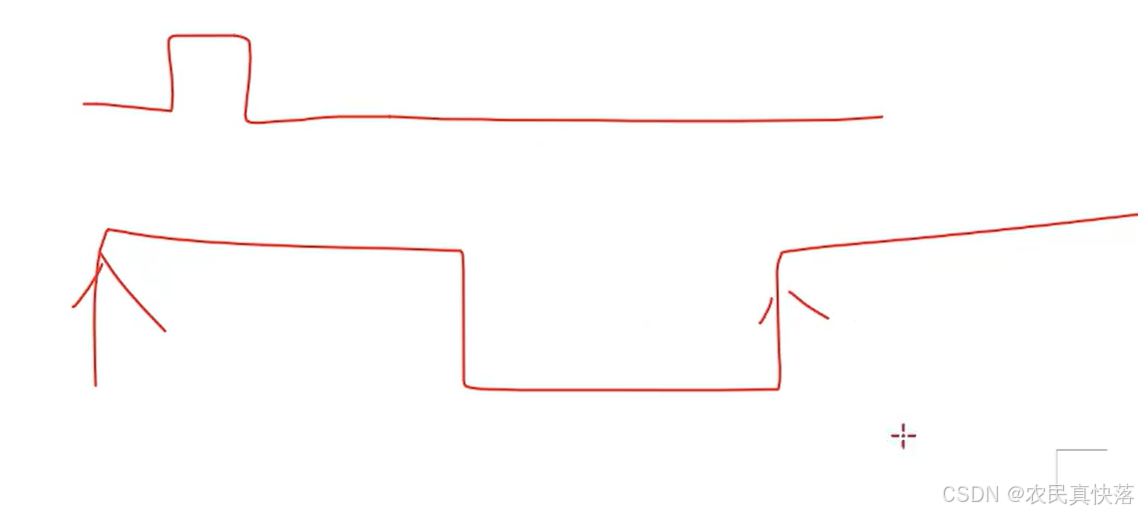
建立时间:在时钟的有效沿(以上升沿为例)到来之前,数据的输入端信号必须保持稳定的最短时间
保持时间:在时钟的有效沿(以上升沿为例)到来之后,数据的输入端信号必须保持稳定的最短时间
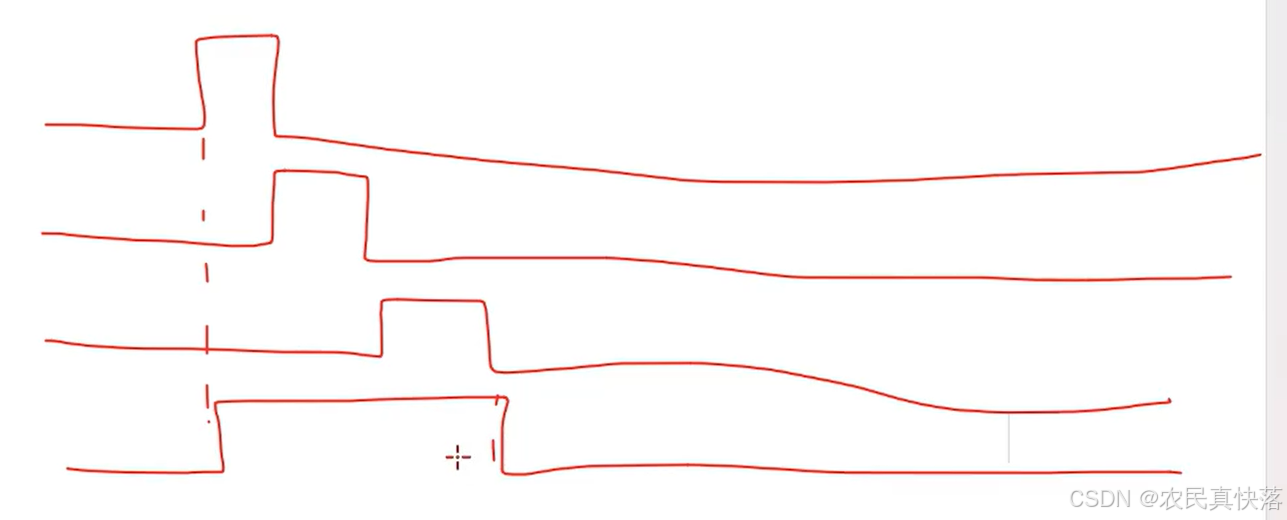
单比特信号的跨时钟处理 慢时钟域的信号传输到快时钟域 打两拍 快时钟域的信号传输到慢时钟域 如图所示,第一行是脉冲信号,第二行是慢时钟域的时钟。如果从快时钟域要同步一个脉冲信号到慢时钟域,容易出现上升沿没有采样到脉冲信号的情况。
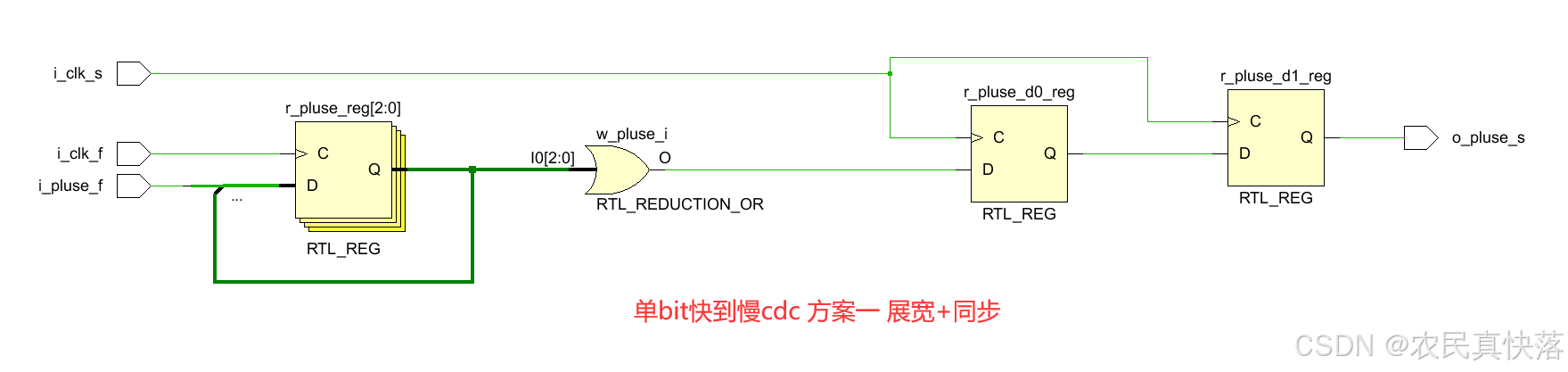
方案一 脉冲展宽+同步 (打拍打拍,进行或) 代码 1 2 3 4 5 6 7 8 9 10 11 12 13 14 15 16 17 18 19 20 21 22 23 24 25 26 27 28 29 30 31 32 33 34 35 36 37 38 39 40 41 42 module fast2slow_cdc ( input i_clk_f , input i_pluse_f , input i_rst_n , input i_clk_s , output o_pluse_s ); reg [2 :0 ] r_pluse ; always @(posedge i_clk_f or negedge i_rst_n) begin if (~i_rst_n) begin r_pluse <= 'b0 ; end else begin r_pluse <= {r_pluse[1 :0 ],i_pluse_f}; end end wire w_pluse ; assign w_pluse = |r_pluse ; reg r_pluse_d0 ; reg r_pluse_d1 ; always @(posedge i_clk_s) begin r_pluse_d0 <= w_pluse ; r_pluse_d1 <= r_pluse_d0 ; end assign o_pluse_s = r_pluse_d1 ; endmodule
存在的问题:采用脉冲展宽+同步,在或时可能产生毛刺
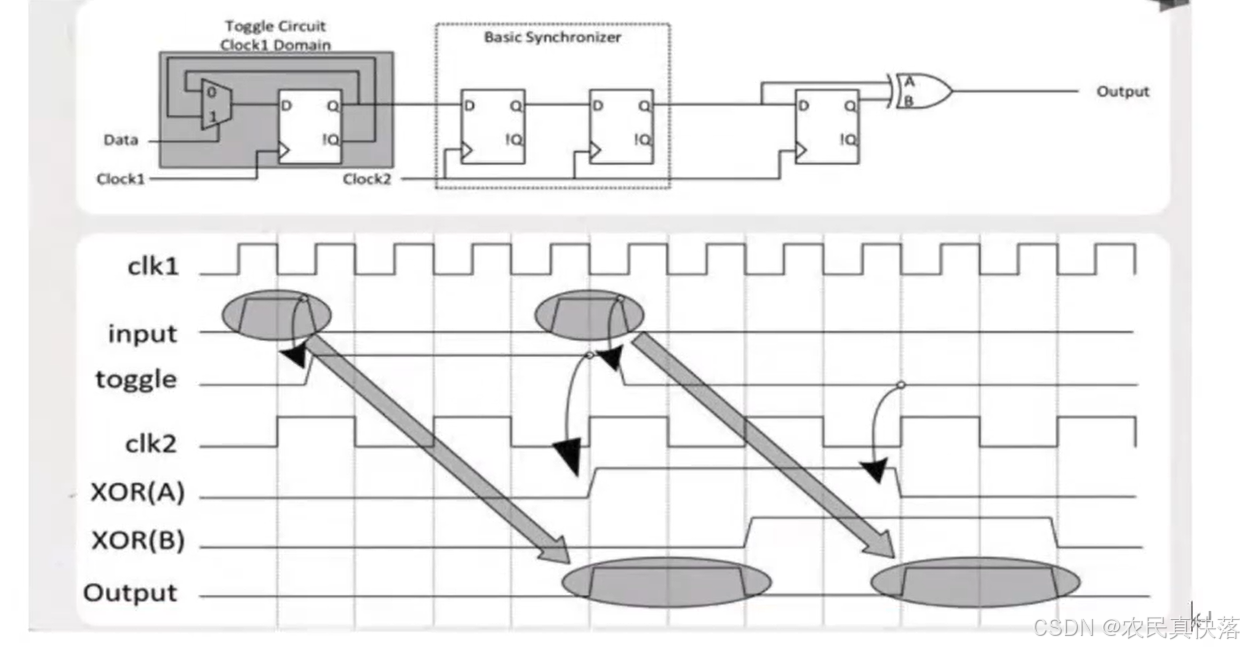
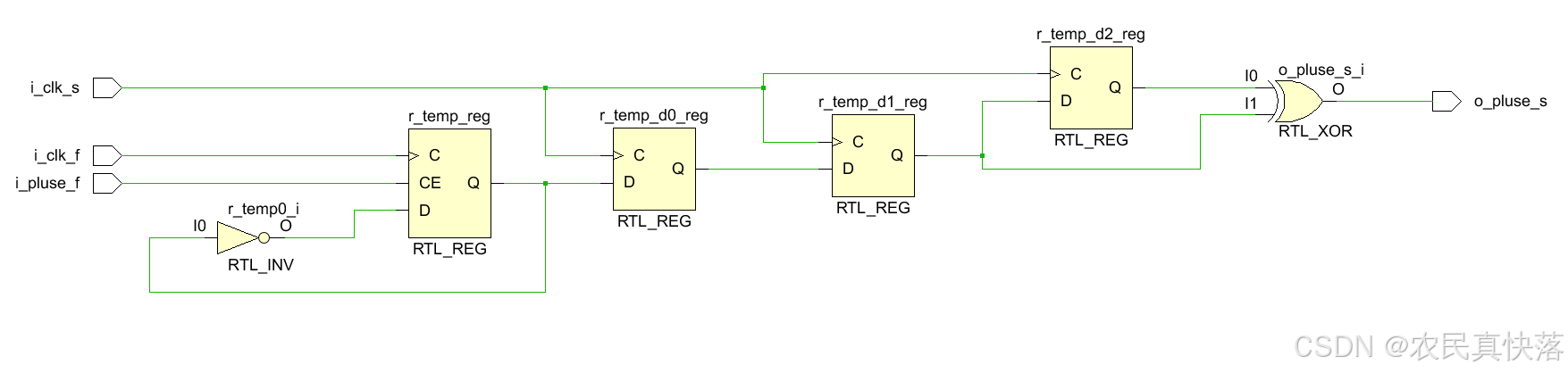
原理图 方案二 脉冲电平检测+双触发器同步+边沿检测 优点: 对时序比较友好缺点: 相邻的脉冲太近时,会检测不到
代码 1 2 3 4 5 6 7 8 9 10 11 12 13 14 15 16 17 18 19 20 21 22 23 module fast2slow_cdc2 ( input i_clk_f , input i_pluse_f , input i_clk_s , output o_pluse_s ); reg r_temp = 0 ; always@(posedge i_clk_f) begin if (i_pluse_f) r_temp <= ~r_temp; else r_temp <= r_temp; end reg r_temp_d0; reg r_temp_d1; reg r_temp_d2; always@(posedge i_clk_s) begin r_temp_d0 <= r_temp ; r_temp_d1 <= r_temp_d0 ; r_temp_d2 <= r_temp_d1 ; end assign o_pluse_s = r_temp_d2 ^ r_temp_d1 ; endmodule
原理图