案例和代码来自小梅哥课程,本人仅对知识点做做笔记,如有学习需要请支持官方正版。
该系列目录: Verilog线性序列机点灯案例(一) Verilog线性序列机点灯案例(二) Verilog线性序列机点灯案例(三) Verilog线性序列机点灯案例(四)
设计目标 我们的FPGA的时钟频率为50MHz ,即每个周期20ns。
持续时间
对应周期数
0.25s
12,500,000 cycles
0.5s
25,000,000 cycles
0.75s
37,500,000 cycles
1s
50,000,000 cycles
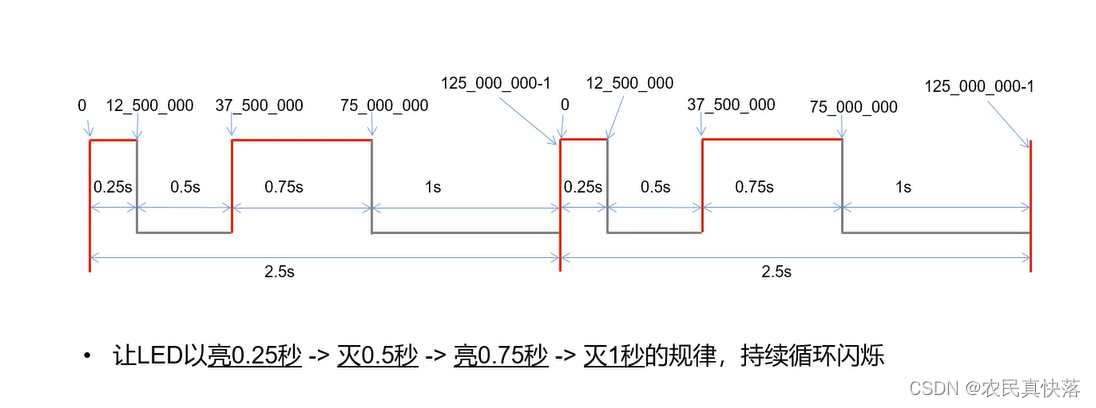
我们的目标是让LED以**【亮0.25秒->灭0.5秒->亮0.75秒->灭1秒】**的规律,持续循环闪烁。
设计思路 为了完成这样的规律性闪烁,需要一个计数器,计数满2.5秒归零,即:当上升沿采样到125,000,000-1时,计数器归零。
RTL 及 Testbench led_ctrl1.v 是RTL代码
1
2
3
4
5
6
7
8
9
10
11
12
13
14
15
16
17
18
19
20
21
22
23
24
25
26
27
28
29
30
31
32
33
34
35
36
37
38
39
module led_ctrl1 ( clk, rst_n, led_out ); input clk; input rst_n; output reg led_out; reg [26 :0 ] counter; always@(posedge clk or negedge rst_n) begin if (!rst_n) begin counter <= 0 ; end else if (counter == 125_000_000 -1 ) begin counter <= 0 ; end else begin counter <= counter + 1 ; end end always@(posedge clk or negedge rst_n) begin if (!rst_n) begin led_out <= 0 ; end else if (counter == 0 ) begin led_out <= 1 ; end else if (counter == 12_500_000 ) begin led_out <= 0 ; end else if (counter == 37_500_000 ) begin led_out <= 1 ; end else if (counter == 75_000_000 ) begin led_out <= 0 ; end end endmodule
tb_led_ctrl1.v是testbench代码
1
2
3
4
5
6
7
8
9
10
11
12
13
14
15
16
17
18
19
20
21
22
23
`timescale 1 ns / 1 ns module tb_led_ctrl1 (); reg clk; reg rst_n; wire led_out; initial clk = 1 ; always #10 clk = ~clk; led_ctrl1 led_ctrl1_inst0 ( .clk (clk), .rst_n (rst_n), .led_out (led_out) ); initial begin rst_n = 0 ; #201 ; rst_n = 1 ; #250_000_000 $stop; end endmodule
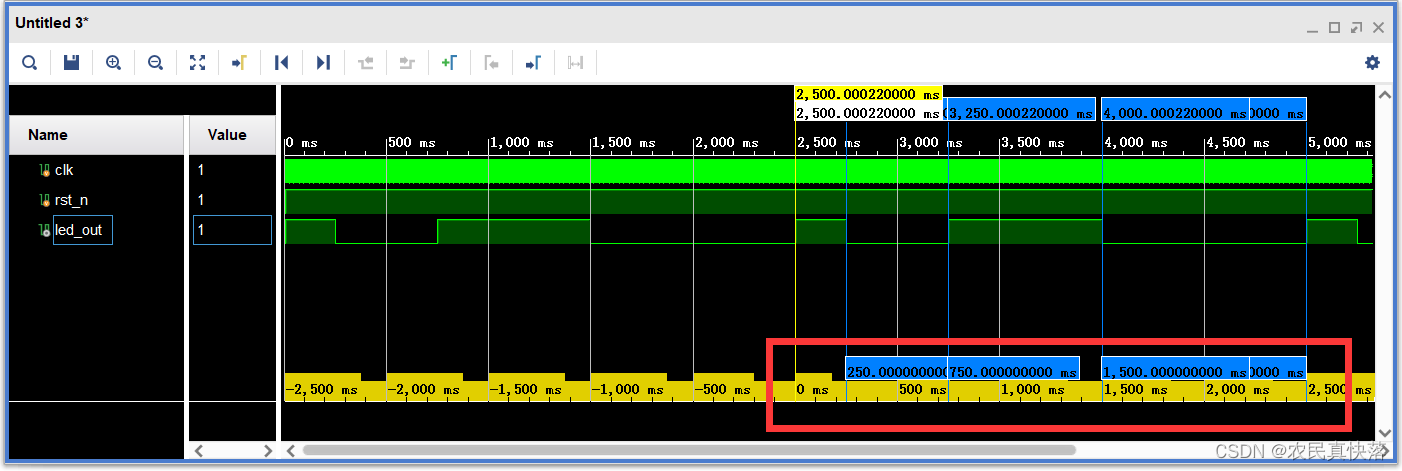
仿真结果 从图中黄色marker标注下的时间间隔可以看出,仿真结果和预期目标一致。
存在的问题? 如果到此就结束了,那么案例(二)和(一)并没有多大区别。
仿真时间过长
可读性较差
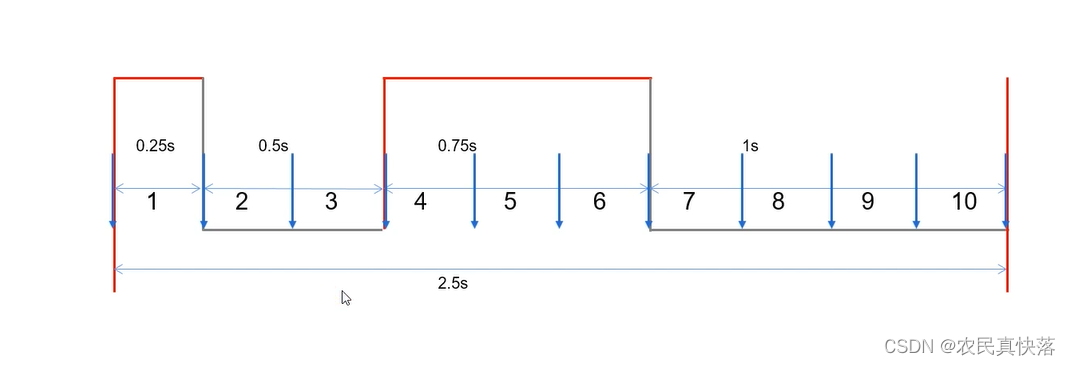
针对以上问题,观察我们的需求是让LED以**【亮0.25秒->灭0.5秒->亮0.75秒->灭1秒】**循环,那么最基本的单位可以视为0.25秒,我们可以使用两个计数器,第一个计数器计数到0.25秒(12500_000 - 1个cycles)时第二个计数器加1。按照这个思路,我们在设置led时只需要关注好第二个计数器即可,1亮,2、3灭,4、5、6亮,7、8、9、10灭,显然可读性是比0亮,12_500_000灭好多了。
改善后的代码 RTL代码 1 2 3 4 5 6 7 8 9 10 11 12 13 14 15 16 17 18 19 20 21 22 23 24 25 26 27 28 29 30 31 32 33 34 35 36 37 38 39 40 41 42 43 44 45 46 47 48 49 50 51 52 53 54 55 module led_ctrl1 ( clk, rst_n, led_out ); input clk; input rst_n; output reg led_out; parameter MCNT = 12500_000 - 1 ; reg [26 :0 ] counter0; always@(posedge clk or negedge rst_n) begin if (!rst_n) counter0 <= 0 ; else if (counter0 == MCNT) counter0 <= 0 ; else counter0 <= counter0 + 1 'd1 ; end reg [3 :0 ] counter1; always@(posedge clk or negedge rst_n) begin if (!rst_n) counter1 <= 0 ; else if (counter0 == MCNT) begin if (counter1 == 9 ) counter1 <= 0 ; else counter1 <= counter1 + 1 'd1 ; end else counter1 <= counter1; end always@(posedge clk or negedge rst_n) if (!rst_n) led_out <= 0 ; else begin case (counter1) 0 :led_out <= 1 'd1 ; 1 :led_out <= 1 'd0 ; 2 :led_out <= 1 'd0 ; 3 :led_out <= 1 'd1 ; 4 :led_out <= 1 'd1 ; 5 :led_out <= 1 'd1 ; 6 :led_out <= 1 'd0 ; 7 :led_out <= 1 'd0 ; 8 :led_out <= 1 'd0 ; 9 :led_out <= 1 'd0 ; default:led_out <= led_out; endcase end endmodule
testbench代码 1 2 3 4 5 6 7 8 9 10 11 12 13 14 15 16 17 18 19 20 21 22 23 24 25 `timescale 1 ns / 1 ns module tb_led_ctrl1 (); reg clk; reg rst_n; wire led_out; initial clk = 1 ; always #10 clk = ~clk; led_ctrl1 led_ctrl1_inst0 ( .clk (clk), .rst_n (rst_n), .led_out (led_out) ); defparam led_ctrl1.MCNT = 12500 - 1 ; initial begin rst_n = 0 ; #201 ; rst_n = 1 ; #20_000_000 ; $stop; end endmodule
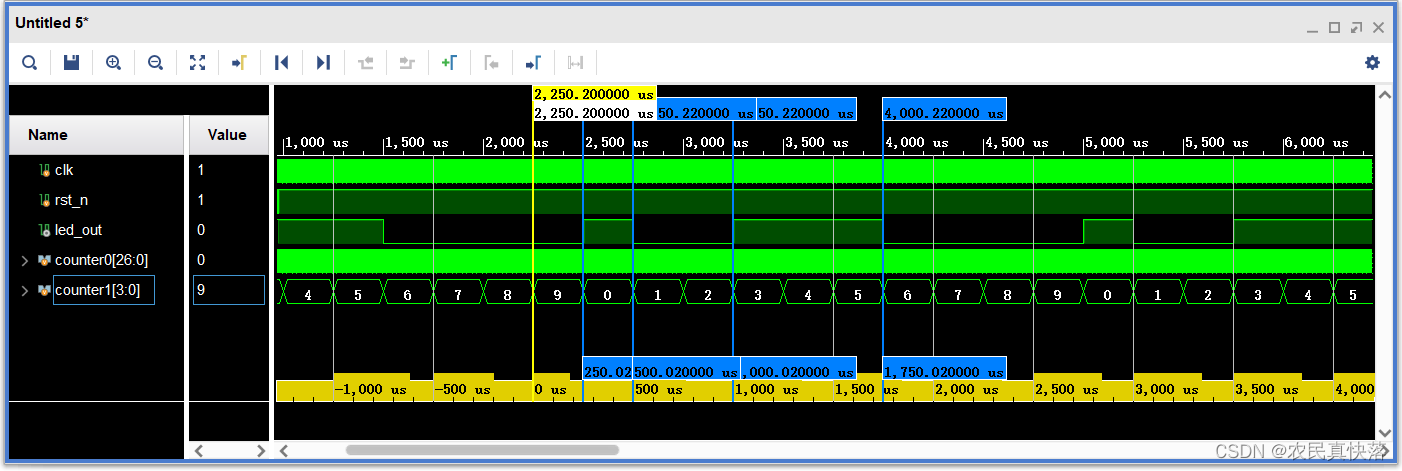
仿真结果